
• Link to Facebook
  • Link to Instagram
  • Link to Pinterest
  • Link to LinkedIn
  • Link to WhatsApp
  • Link to Youtube
  • Register
  • Log in
Professional English Academy
  • About me
  • My Courses
    • Mini Lessons
    • Interactive lessons
    • Picture lessons
    • Business Videos
    • Fluency for Work (Vocabulary)
    • IELTS
    • Finance, Accounting, Legal English
    • General Exercises (B2-C1)
    • Grammar for English
    • Writing
    • Pronunciation & Stress
    • 100 Things Everyone Should Know
    • Games and Quizzes
    • Articles and exercises
    • Speaking in Work Situations
    • Video Lessons
  • FAQ
  • Blog
  • Menu Menu
  • Home
  • My courses – LP
  • General English

Video Lessons

Curriculum

  • 5 Sections
  • 76 Lessons
  • Lifetime
Expand all sectionsCollapse all sections
  • 2024-2025
    8
    • 1.1
      What is the exit poll and how does it work?
    • 1.2
      What Happens When You Procrastinate Too Much
    • 1.3
      How to change your personality
    • 1.4
      Gibraltar: What’s inside The Rock?
    • 1.5
      A brief history of Downing Street
    • 1.6
      The rocky 1960s origin of online dating
    • 1.7
      Why do we gossip?
    • 1.8
      How to Build Mental Strength
  • 2023-2024
    6
    • 2.1
      Tips to save money
    • 2.2
      Would you pass the wallet test?
    • 2.3
      One of history’s most dangerous myths
    • 2.4
      The Seed Vault
    • 2.5
      Commuting to work
    • 2.6
      The history of New Year’s Resolutions
  • 2022-2023
    14
    • 3.1
      Critical Thinking
    • 3.2
      Daylight saving time
    • 3.3
      Functional illiteracy in Europe
    • 3.4
      Brain Hacking
    • 3.5
      Conspiracy theories
    • 3.6
      Electric cars
    • 3.7
      How do you survive a zombie attack?
    • 3.8
      How green is green energy?
    • 3.9
      Money
    • 3.10
      Schema
    • 3.11
      Small talk can make you happier
    • 3.12
      The Mango Cult
    • 3.13
      When are you actually an adult?
    • 3.14
      Whodunnit
  • 2022-2022
    19
    • 4.1
      The limits of human memory
    • 4.2
      The history of the United Nations
    • 4.3
      Separated at birth
    • 4.4
      Is nuclear power the solution?
    • 4.5
      Meeting the parents
    • 4.6
      Is ecotourism a sustainable practice?
    • 4.7
      Endangered Languages
    • 4.8
      Constitutional monarchy vs republic
    • 4.9
      China’s Social Credit System
    • 4.10
      As it used to be
    • 4.11
      The Locavore Movement
    • 4.12
      The person who knows how to cheer your day up
    • 4.13
      The Savant
    • 4.14
      The Science of Christmas
    • 4.15
      The Zero Waste Lifestyle
    • 4.16
      What might Bill Gates be worried about?
    • 4.17
      Who should tackle misinformation on social media?
    • 4.18
      Why videos go viral
    • 4.19
      World Peace Games
  • 2021-2022
    29
    • 5.1
      #32 Should you trust strangers?
    • 5.2
      #31 The Ravens of the Tower of London
    • 5.3
      #30 Food waste
    • 5.4
      #29 Unpaid workers
    • 5.5
      #28 Anti-social Behaviour?
    • 5.6
      #27 Urbanisation
    • 5.7
      #26 The Dark Side of Self-improvement
    • 5.8
      #25 The history of chocolate
    • 5.9
      #24 Thank god you are here!
    • 5.10
      #23 Test Tube Meat
    • 5.11
      #22 Escape from the Grand Canyon
    • 5.12
      #20 Should we embrace GMO food?
    • 5.13
      #19 Bletchley Park
    • 5.14
      #18 Money
    • 5.15
      #17 How many friends can you have?
    • 5.16
      #16 Success
    • 5.17
      #15 Studies of panicking crowds
    • 5.18
      #14 The benefits of paternity leave
    • 5.19
      #13 Keep calm and carry on
    • 5.20
      #12 The history of the English language
    • 5.21
      #11 St. Patrick’s Day
    • 5.22
      #10 National Anthem
    • 5.23
      #8 What counts as political corruption?
    • 5.24
      #7 How an amateur built the world’s biggest dome
    • 5.25
      #5 Cycle Superhighway London
    • 5.26
      #6 Does Child Labour Help Children in Poverty?
    • 5.27
      #3 How computers threaten the job of mid-skilled workers
    • 5.28
      #2 Should you be allowed to sell your kidney?
    • 5.29
      #1 Surviving quicksand

The history of the United Nations

[intense_content_section background_type=”color” background_color=”#ffffff”]
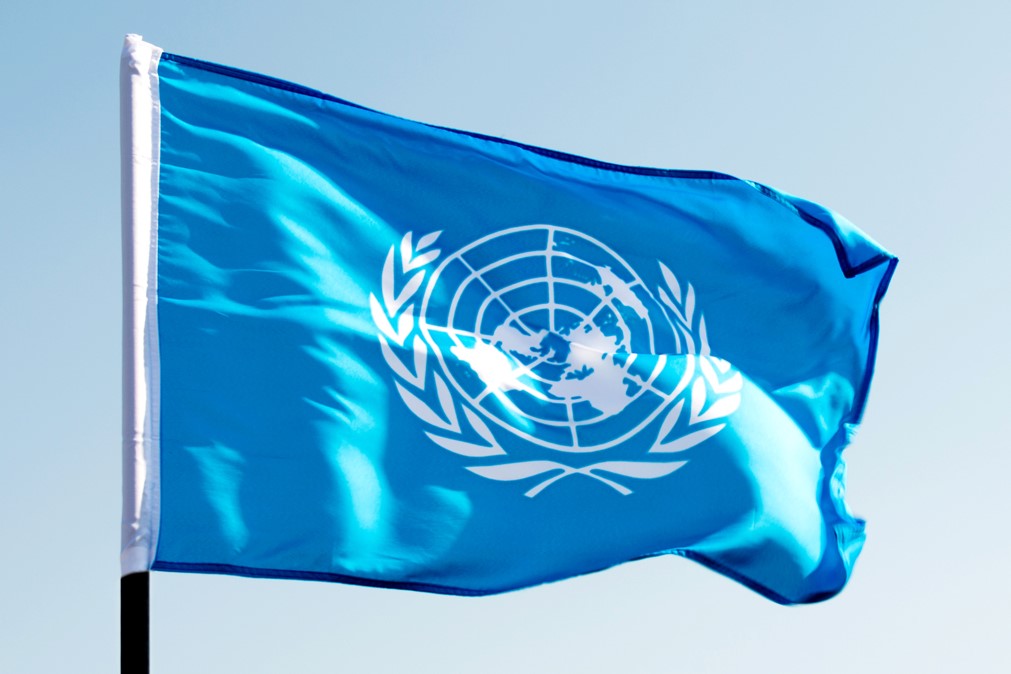
United Nations Office on Drugs and Crime

Starting Point. Discuss the questions below.

• When and why was the United Nations formed?
• What is the purpose of the United Nations?
• Think of 5 words which best describe the United Nations.
• Is it important to have the United Nations? Why or why not?

Focus on Vocabulary. Match the words with the correct meaning.

Focus on Listening. Watch the video. Read the transcript below if necessary.

Transcript

In one of the busiest cities in the world, between iconic buildings and hot dog stands, sits the headquarters of an international organisation with one mission, world peace. I’m talking of course about the United Nations or the UN for short. You’ve probably heard of it before. The UN first became a thing in 1945, just after the Second World War. The big allied four wanted to prevent another huge war from ever happening again, so they formed a new organisation designed to do just that.

NEWS REPORTER: San Francisco California, a momentous conference begins. Here leaders of the United Nations representing all, but a fraction of the Earth’s population are laying the foundations of international security in the post war world.

On the 25th of April 1945, 850 representatives from 50 countries met in what was, at the time, the largest international gathering ever. The end result was this, the United Nations Charter. It’s a legally binding contract between all the countries involved and includes all the things the UN wants to achieve, like getting rid of poverty and disease, providing food and aid to those who need it, improving health services, disaster relief, protecting humans rights and making sure countries follow international laws. On the 24th of July 1945, after a bunch of revisions, it was agreed upon and signed by all the countries involved. And a couple of months later on the 24th of October it came into force, the date we now mark as the UN’s birthday.

Today the United Nations consists of 193 countries and has accomplished a lot of the things it first set out to do. It’s managed by the Security Council, which is made up by five permanent members France, Britain, the United States, China and Russia. They’re in charge of helping countries resolve conflicts. To help make any decisions the UN holds a General Assembly. Which is overseen by this guy, Antonio Guterres, the UN Secretary General. It’s held every year in September at New York headquarters. A lot of people are invited to speak there, and it’s given many people, not just politicians, a platform to have their voice heard. Even Beyonce has belted out a ballad for the assembly. You sure were Beyonce, you sure were. The United Nations now has a bunch of specialised agencies, like the World Health Organisation and UNICEF, which helps to improve the lives of kids especially those in disadvantaged areas.

While it all sounds pretty good, the organisation has some critics who say the United Nations isn’t as effective as it should be, that it favours some countries over others and that it spends way too much money to operate. But over the weekend, as the UN turned 75, lots of people helped celebrate what it has accomplished and what it can still achieve.

Focus on Comprehension. Answer the questions below about the video.

1. Where are the headquarters of the United Nations?
2. What anniversary did the United Nations recently celebrate?
3. When and why was the United Nations created?
4. What sorts of things does the United Nations Charter cover?
5. How many countries are part of the UN?
6. What does the UN Security Council do?
7. What happens at the General Assembly?
8. What is the name of the UN organisation that helps improve the
lives of kids?
9. What do critics of the UN say about the organisation?

Focus on Speaking. 

Use these expressions to show your opinion:

I think there are three important things to remember when ……..

The most important thing is …. Because ….

For example, …..

Another thing which is important is ……………….

For instance, ……

Finally, you should …….

I imagine that …

I suppose that ….

I guess that ….

It could be that …

It might be that ….

It’s a possibility that ….

It’s very / quite possible that …..

It’s likely that ……

  • What did you SEE in this video?
  • What do you THINK about what you saw in this video?
  • What does this video make your WONDER?
  • What did you LEARN from this story?
  • What was SURPRISING about this story?
  • Do we need organisations like the UN? Why (not)?
  • Who should pay for the upkeep of the UN and similar organisations?
[/intense_content_section]

The limits of human memory
Prev
Separated at birth
Next

Professional English

Online English Language Trainer for busy professionals

Madrid

Spain

Opening Hours

Monday           07:00–23:00
Tuesday           07:00–23:00
Wednesday     07:00–23:00
Thursday         07:00–23:00
Friday              07:00–23:00
Saturday          08:00–17:00
Sunday            Closed

© Copyright - English for Professionals
  • Link to Facebook
  • Link to Instagram
  • Link to Pinterest
  • Link to LinkedIn
  • Link to WhatsApp
  • Link to Youtube
  • Terms and Conditions
  • Terms of Service
  • Privacy Policy and Data Protection
  • Acknowledgement
Link to: Business Videos Link to: Business Videos Business Videos
Scroll to top Scroll to top Scroll to top
Manage Consent
To provide the best experiences, we use technologies like cookies to store and/or access device information. Consenting to these technologies will allow us to process data such as browsing behaviour or unique IDs on this site. Not consenting or withdrawing consent, may adversely affect certain features and functions.
Functional Always active
The technical storage or access is strictly necessary for the legitimate purpose of enabling the use of a specific service explicitly requested by the subscriber or user, or for the sole purpose of carrying out the transmission of a communication over an electronic communications network.
Preferences
The technical storage or access is necessary for the legitimate purpose of storing preferences that are not requested by the subscriber or user.
Statistics
The technical storage or access that is used exclusively for statistical purposes. The technical storage or access that is used exclusively for anonymous statistical purposes. Without a subpoena, voluntary compliance on the part of your Internet Service Provider, or additional records from a third party, information stored or retrieved for this purpose alone cannot usually be used to identify you.
Marketing
The technical storage or access is required to create user profiles to send advertising, or to track the user on a website or across several websites for similar marketing purposes.
  • Manage options
  • Manage services
  • Manage {vendor_count} vendors
  • Read more about these purposes
View preferences
  • {title}
  • {title}
  • {title}
 
Send this to a friend