
Video Lessons 5 Sections76 LessonsLifetime
#25 The history of chocolate
[intense_content_section background_type=”color” background_color=”#ffffff”]
Starting Point. Discuss the questions below.
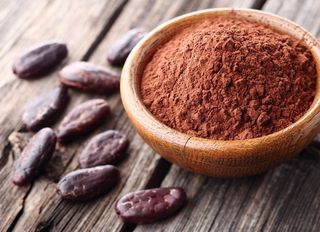 Chocolate is the most popular sweet treat in the world. People around the world (but mostly in Europe and the United States) consume more than 3 million tons of cocoa beans a year, according to the World Cocoa Foundation. And, not only does eating chocolate make you feel good, it may also be good for your heart and your brain.
- Chocolate is prepared from the fruit of the Theobroma cacao, a tropical tree whose name means “food of the gods” in Greek.
- Theobroma cacao trees are native to the Amazon and Orinoco river basins in South America.
- Cacao trees bear fruit that are about the same size and shape of a papaya. The pods are full of up to 50 sour seeds, or beans, covered in white pulp.
- Cacao seeds are harvested by hand because machines could injure the trees.
The history of chocolate
Most people eat chocolate without thinking about its history. However, the story of chocolate is one that spans centuries, and involves exploration, colonialism, industrialisation and technology.
Cocoa beans – the source of chocolate – come from the cacao trees of Central America. The Aztecs ground cocoa beans into a paste, added water and spices and drank ‘chocolatl’ (bitter-water). According to Mexican mythology, cocoa beans were a blessing from the Gods. Human sacrifices were performed by the ancients, with victims given cocoa as their last meal. The first cocoa plantations are believed to have been established in Central America around 600 AD.
Columbus brought back cocoa beans from the 1492 exploration of the Americas, yet the potential of these small dark beans wasn’t grasped until 1519 when the explorer Hernando Cortez learned of the Aztecs’ methods of producing a warm, dark cocoa liquid drink. The Spanish started to produce chocolate, but added cane sugar to overcome the beans natural bitterness, making it more popular with Europeans. Spain kept its production a closely guarded secret: monks processed the cocoa beans in secluded monasteries. Cocoa trees were planted throughout its colonies and Spain managed to control the cocoa trade, profiting greatly. It wasn’t until the early seventeenth century that knowledge of cocoa processing spread throughout Europe.
The first chocolate shop was opened in London in 1657, yet the price of chocolate put it out of the reach of most people. The price of chocolate fell over the years as its production became mechanized. Mass-produced chocolate became more affordable for working people. In 1765 the first chocolate factory was established. The invention of the cocoa press in 1828 meant cocoa butter could be extracted from the bean, giving drinking chocolate a smoother consistency. A solid edible chocolate bar was first produced by an English company in 1847; milk chocolate was first produced in Switzerland in 1876 when a way of adding milk to chocolate was conceived.
Fast forward to the present day and we enjoy more varieties of chocolate than ever before. Knowing what a long and interesting history it has had, you might never look at the humble chocolate bar the same way again.
Focus on Vocabulary. Match the words with the correct meaning.
Focus on Listening. Watch the video.
Transcript
If you can’t imagine life without chocolate, you’re lucky you weren’t born before the 16th century. Until then, chocolate only existed in Mesoamerica in a form quite different from what we know.
As far back as 1900 BCE, the people of that region had learned to prepare the beans of the native cacao tree. The earliest records tell us the beans were ground and mixed with cornmeal and chili peppers to create a drink – not a relaxing cup of hot cocoa, but a bitter, invigorating concoction frothing with foam.
And if you thought we make a big deal about chocolate today, the Mesoamericans had us beat. They believed that cacao was a heavenly food gifted to humans by a feathered serpent god, known to the Maya as Kukulkan and to the Aztecs as Quetzalcoatl. Aztecs used cacao beans as currency and drank chocolate at royal feasts, gave it to soldiers as a reward for success in battle, and used it in rituals.
The first transatlantic chocolate encounter occurred in 1519 when Hernán Cortés visited the court of Moctezuma at Tenochtitlan.
As recorded by Cortés’s lieutenant, the king had 50 jugs of the drink brought out and poured into golden cups.
When the colonists returned with shipments of the strange new bean, missionaries’ salacious accounts of native customs gave it a reputation as an aphrodisiac.
At first, its bitter taste made it suitable as a medicine for ailments, like upset stomachs, but sweetening it with honey, sugar, or vanilla quickly made chocolate a popular delicacy in the Spanish court. And soon, no aristocratic home was complete without dedicated chocolate ware.
The fashionable drink was difficult and time consuming to produce on a large scale. That involved using plantations and imported slave labor in the Caribbean and on islands off the coast of Africa.
The world of chocolate would change forever in 1828 with the introduction of the cocoa press by Coenraad van Houten of Amsterdam. Van Houten’s invention could separate the cocoa’s natural fat, or cocoa butter.
This left a powder that could be mixed into a drinkable solution or recombined with the cocoa butter to create the solid chocolate we know today.
Not long after, a Swiss chocolatier named Daniel Peter added powdered milk to the mix, thus inventing milk chocolate.
By the 20th century, chocolate was no longer an elite luxury but had become a treat for the public.
Meeting the massive demand required more cultivation of cocoa, which can only grow near the equator.
Now, instead of African slaves being shipped to South American cocoa plantations, cocoa production itself would shift to West Africa
with Cote d’Ivoire providing two-fifths of the world’s cocoa as of 2015.
Yet along with the growth of the industry, there have been horrific abuses of human rights.
Many of the plantations throughout West Africa, which supply Western companies, use slave and child labor, with an estimation of more than 2 million children affected.
This is a complex problem that persists despite efforts from major chocolate companies to partner with African nations to reduce child and indentured labor practices.
Today, chocolate has established itself in the rituals of our modern culture.
Due to its colonial association with native cultures, combined with the power of advertising, chocolate retains an aura of something sensual, decadent, and forbidden.
Yet knowing more about its fascinating and often cruel history, as well as its production today,
tells us where these associations originate and what they hide.
So as you unwrap your next bar of chocolate, take a moment to consider that not everything about chocolate is sweet.
Focus on Comprehension. Answer the questions below about the video.
Answers
Focus on Speaking.
Do you eat chocolate very often? What brands do / don’t you like, and why?
What occasions do people give chocolate to others in your country?
Does your country have any traditions or festivals involving chocolate? What happens?
Do you eat a lot of candy / sweets? What is your greatest weakness?[/intense_content_section]
